Friday, December 3, 2010

Future of Magazines


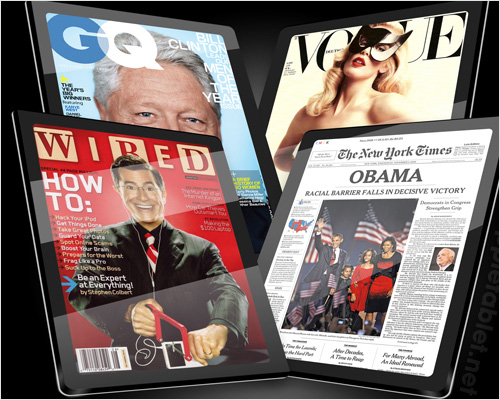
I believe that currently print magazines are following the same fate as print books.   Books are getting replaced by technology, such as: the Nook Color, iPads, and the Kindle.  These new technologies offer more than just books within it.  Now, they are offering magazines and newspapers.  Print magazines will eventually be completely replaced by digital technology.  A lot of people have already bought these e-readers and more are sure to join them.
 
For a while now, magazines have been available on the Internet.  Most people would rather go online to access magazine websites than travel to a store to pick one up or even wait for it to come in the mail.  They are able to receive their information in a more convenient way by going online than going out of their way, creating a hassle for everyday life, and picking one up from public stores.  These magazine sites have the option to search for exactly what you want to read.  Any topic, actor or actress, writer, or date you would like to read about you can just type it into the search bar rather than look through the whole magazine to try to find it.  It is a faster way to read about your interests without having other stories interfering.  Some magazine sites require for a person to pay in order to view the content provided.  The subscriptions are just like you are paying for the actual magazine except that it is easier to receive, faster, and much more convenient.

Online magazines offer a better variety of information and entertainment to its readers.  Their quizzes and surveys they may offer are easier and more fun to take online than on paper.  There are more options also, such as past surveys and quizzes from other months.

It is only a matter of time until print magazines are deleted from our world.

Wednesday, November 24, 2010

Facebook vs Google

Facebook is traditionally known as a social network in which you can remain in contact with your friends by posting on their wall or messaging them.  It also has many applications within its site, including games and quizzes.  Google was traditionally used as search engine.  It was so popular that it the word for “searching” on the Internet was replaced by “google”.  Google was also known for its email, called Gmail.

Facebook has recently released plans that will make it the biggest competitor to Google.  This plan is a messaging service.  “Facebook's service is designed to combine traditional email, instant message and cellphone text messages into one system, routing messages to whichever service is best for each person, and keeping an archive of it all.

Internet users used to spend only half as much time on Facebook than they did on Google, but now those statistics have changed.  People are equally on Facebook as much as they are on Google.  This threatens Google’s business and has resulted in a battle between the 2 giant companies.  Google is beginning to attack back by attempting to create their own social networking features.


“Another threat to Google is Facebook's ad targeting system, which is based on granular information volunteered by users about their real-world identities, as opposed to preferences inferred from Web searches.”  Google has been trying to create social-networking-type services to compete with these threats.  They want to link Google Maps, YouTube, and Picasa to allow interactions between a network of friends.  It has also dabbled in social gaming applications.

Facebook and Google have tried to cooperate with each other, but their actions have greatly slowed this process down.  Facebook blocked its users from being able to use Google’s Friend Connect, and Google has prevented Facebook from transferring friends’ contact information from Google to Facebook.  The 2 companies continue to meet to try to come to agreements and resolve data-sharing matters.  No agreement has yet been made or released to the public.

Source: WSJ - Facebook vs Google

Nook Color

Barnes & Noble have created, and already planned to ship, the new Nook Color.  It is an e-reader in which you can download various books to your device instead of buying the print version.  Now, this device is offering color, making this technology look even more like an actual book.  The cost of this new device is $249, much more expensive than the $139 monochrome Kindle released by Amazon.com.

The Nook Color is a touch screen that offers brilliant colors and connections to the Web with WiFi.  It is available online or in stores at Barnes & Noble.  The preorders are already far exceeding the expectations of the company.

This new device focuses on reading.  It has access to Barnes and Noble’s library that contains 2 million downloadable books and more than 100 magazines and newspapers.  It contains a feature called ArticleView, which offers a clear and readable format of magazine articles.  You are able to share passages from books with friends through Facebook, Twitter, or in-book email system.  You can even digitally lend books to a friend for 14 days by using the LendMe feature.

The Nook Color is built on the Android 2.1 operating system.  This system is used to run many smartphones.  Early next year, the Nook is planning on releasing Android 2.2, which will allow you to play flash videos.  It currently contains Quickoffice for viewing documents, but does not have the capability to edit these documents.  Next year, the Nook Color will release an app store, in which you can download free or paid apps.  Right now, it has Pandora Internet Radio, chess, and Sudoku preloaded on the device, but much more is to come.


Katherine Boehret states “If you love reading and want to share your books with friends or reading updates with social networks, the Nook Color has you covered. It will also give you a taste of tablet computing with functions like browsing the Web, using some apps and eventually, full emailing. Just remember that Nook Color is laser-focused on e-reading.”  I believe this is a great and convenient way for those heavy readers to travel, share, and store books.  However, I will always be more interested and drawn toward the good old-fashioned print book.

Source: WSJ - Nook Color

The Samsung Galaxy Tab


The Samsung Galaxy Tab is the competition for the Apple iPad.  It uses Google’s Android operating system and will be released within the next few weeks.  The capabilities of this device are just as amazing as the iPad.  The many tasks contained in these devices are email, web browsing, music and video playback, social networking, and photo viewing.

There are major differences of these devices.  While the Tab has a 7-inch screen, the iPad has a 9.7-inch screen.  In other terms, the Tab has less than half the actual digital screen size that the iPad has.  This difference allows the Tab to be lighter and more easily used with one hand than the iPad.  However, many people would prefer a larger screen for viewing purposes than a lighter mechanism.

The Tab is 2 inches shorter and 3 inches narrower than the iPad.  It weighs less, has a smaller screen, but has the same resolution as the iPad.  The material that is able to be show on the display is almost equal to each other.  The iPad’s screen is a bit faster than the Tab, according to Walter S. Mossberg who tested the technology.  Both devices come with 16 gigabytes of flash storage, but for the Tab, some are internal and others are removable memory cards.  Both have the option of buying, at an extra cost, more space.  The iPad has up to 64 gigabytes, all internal, while the Tab only goes up to 32 gigabytes.

Cost is another factor.  If you decide on a iPad with cellular-data service, there is no contract to sign and only two monthly prices of $14.99 for 250 megabytes and $25 for 2 gigabytes.  The Tab is much more complicated.  “Verizon, which is selling only the $600 no-contract model, says its pricing will start at $20 a month for 1 gigabyte of data. Sprint charges $29.99 monthly for 2 gigabytes and $59.99 for 5 gigabytes. T-Mobile has different prices for no-contract and contract models, and different rates for new and existing customers. Just two examples: a new customer under contract on a Tab can pay $30 monthly for 200 megabytes or $50 for 5 gigabytes.

Battery Power is always important to the consumer of technology.  Different companies make varying claims about the battery life of the Tab.  While Samsung says it can last up to 13 hours on a single charge, T-Mobile says only 8 hours.  Walter tested the theories the same way he tested the iPad’s battery capabilitiy.  “I put the screen on nearly full brightness, left the Wi-Fi on to collect email and played back-to-back videos until the unit died. My test Tab lasted six hours, 50 minutes, though at six hours, 10 minutes the screen dimmed irrevocably to a darkness level that made it useless. In the same test last spring, the iPad logged 11 hours, 28 minutes.

With all the testing that Walter put the Tab and iPad through, the iPad came out on top every time.  Whichever way the consumer goes, they will get a good product.  Walter states that “the Tab is a very attractive product and I enjoyed using it. For buyers who want to spend less up front, don't mind the smaller screen, prefer the more compact dimensions and one-handed usability, and place high value on the cameras and on Flash, it may well be a better choice.”  He admits that he still prefers the iPad to the Tab, and looking at his review, I agree.  I believe that the iPad is the better device.  The cost, battery life, size, and hardware make it a simple choice.  Apple iPad all the way!

Saturday, November 20, 2010

Cell Phone Explanation to Child


A cell phone is a telephone that is mobile and has numerous other functions.  It is mainly used to contact people, either through calling or text messaging.  Certain networks have more service available than others.  There can be “dead-spots” in which the cell phone will not even work.  The availability of the service gets cut off or is not in the area.  Examples of “dead-spots” are subways, tunnels, or wildernesses.

Texting is very popular today.  It is when you type a message to someone on your contact list by using the keyboard.  Phones today have keyboards with all the letters of the alphabet on it, making it very convenient to text, but they still have the capability to be old-fashioned by clicking the number buttons a certain amount of times in order to get the desired letter.

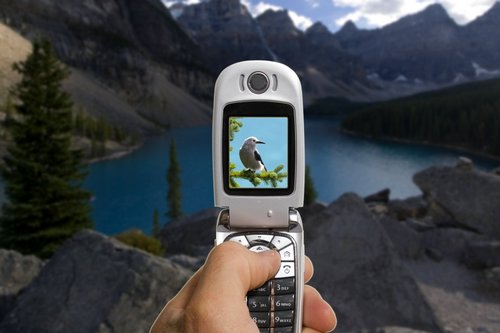
Most phones come equipped with a camera.  It works the same way as a digital camera, only with fewer pixels in some cases.  You just point the lens at what you want and either click okay or the camera button.  The pictures will remain saved on your phone’s memory until erased by you.  Phones also have the capability to take short videos using the same method.

Cell phones have the option of downloading, uploading, or creating your own personal ringtones.  You used to have to buy them off ringtone sites that were added to your phone, but now you can use your Bluetooth capabilities or text messaging to obtain any song you desire.  Bluetooth makes it possible to share information from phone to phone, phone to computer, or computer to phone.

Spectrum Allocation Issues


The communications spectrum includes the range of electromagnetic radiation frequencies hat are used in the wireless communication systems.  Mobile communications use far less powerful transmitters than that of broadcasters on the radio.  Society must decide how to allocate scarce resources, such as the communications spectrum, to compelling interests. 

The growing reliance on the information infrastructure makes society increasingly vulnerable to technical disruption of telecommunications providers.  If anything goes wrong digitally, too many people will not know what to do.  They have gotten so reliant on technology that they cannot live without them.

Advanced digital technology also poses barriers to the legitimate electronic surveillance needs of law enforcement officials while at the same time raising the specter of excessive snooping on ordinary citizens.  Today, it is extremely easy for someone to find out any kind of information about a person by using different types of media.  These types include the Internet and tapping into various frequencies of radios or phones.  This poses a threat to everyone’s personal information.

Impact of the Telecom Act


The Telecommunications Act of 1996 was intended to untangle ownership rules and line-of-business restrictions and let free market forces prevail.  The expectation was that industry structure would remain fluid and that competition and incessant technological changes would force down prices. 

The immediate impact of the act was to trigger a wave of consolidation within the industry while local telephone companies continued to resist competition.  The Telecommunications Act reduced the number of major media companies from 50 to 6 in 22 years.  The FCC, Federal Communications Commission, did a study that concluded that the Act had resulted in a decline in the number of radio station owners.  This was even during the time that the commercial stations in the United States had increased.

Consumer activist Ralph Nader argued the act was an example of corporate welfare spawned by political corruption, because it gave away to incumbent broadcasters valuable licenses for broadcasting digital signals on the public airwaves.”


Wednesday, November 10, 2010

www.mashable.com


Mashable, founded in 2005, is one of the best sites to get your news in social and digital media.  It contains more than 30 million monthly pageviews.  It provides its audience with analysis of trends, reports on breaking web news, social media resources, and reviews of new websites.  This site is very easy to navigate through and find what you desire.  This is very important for a site to be successful. 

Mashable has a well-done design and a good use of space.  I approve how they use a blue color scheme to go along with the logo.  Without even reading the title, you can tell what site you are on by the color usage.  It contains drop boxes so that you can find a top story on Facebook or the iPhone with ease.  They provide information about business, social media, technology, entertainment, and even available job listings.

I found the social media resources really convenient and creative.  One article, “20 Free Social Media Icon Sets For a More Shareable Website”, offers various icons for blogs or other websites.  As we have learned, visual effects add a lot to a website or blog and result in a bigger audience.

The site also offers advice for those people trying to obtain a job.  They have an article, “Top 5 Qualities to Look for in Startup Job Candidates”, in which they list qualities that will help a person during future interviews.  Some of these characteristics include: entrepreneurial spirit, accountability, and innovative outlook.

Mashable is a very useful site for entrepreneurs, bloggers, Facebook users, marketers, social media enthusiasts, among many others.

The Promotion of Concordia College


When promoting a college, you need to make sure that someone is always available and ready to communicate with people who come asking about the school.  One thing I would do, is to convey a message to potential college students that our college is anxiously waiting to aid them in any questions or concerns they may have about applying to college.  In order to implement this, I would first make sure that there is a representative ready at a phone or readily checking e-mails from potential incomers.  Then, I would put out posters on buses, subways, and high schools that state what our goals, our excitement to meet new people, and contact information.

Another tool is Facebook.  A vast amount of youth is on this social site.  They not only use it for communication, but research and news as well.  I would make sure to keep up with all of the Concordia College events by posting about them on their Facebook site.  This reaches out to an enormous and diverse population.

Another media tool is YouTube.  Here there is the option to post videos of events at the college, interviews of current students, and present tours of the campus.  These are especially important for those potential students who are not as easily able to make the trip to the campus.  They are able to see that Concordia College also cares about those who are not from the New York area and that we welcome people from everywhere.

Another strategy that would be very successful is inviting potential students to the different events at the college.  Events such as Preview Day, choir concerts, festivals, among others, promote social interaction and help people communicate more efficiently.  They are able to participate in activities and feel what it would be like to attend college at Concordia.


4 Models of PR


1) The press agentry/ publicity model is the practice of one way communication, telling the public almost anything to get them to act in a prescribed manner.

2) Public information/ journalism is to simply send out information you want to convey to the public, through various media channels.  You do not even check to see if they got the information.  So this is also one way, not really communication.

3) Two way asymmetric, the most common Public Relations practice today, is sending out information and then doing research to see if the public understands it in the way you intended.  If not, then you might refine your methods.

4) Two way symmetric is the most conducive for optimum mutual benefit.  It involves researching the audience and finding out what is important to them and how they get their information, as well as evaluating how the public and the company see their relationship as mutually beneficial. 

Successful PR


Public Relations is mainly based off of research, such as public opinion polls, surveys, interviews, and questionnaires.  There are three basic phases to follow in order to be successful: preparation, implementation, and impact.  Success begins at creating a serious assessment of public attitudes.  There must be adequate background information on your public, or it makes it extremely hard to communicate with the people.  The same goes for research and evaluation.  Without proper information, you cannot completely identify public attitudes. 

A detailed strategy is one key to success.  It must be managed well and allow for changes along the way.  It mainly oversees many small tasks, which makes up overall objectives of the organization.  It is important to obtain all the objectives to the best of the company’s ability.

Public Relations have the goal of fostering public support.  In a for-profit organization, a public may support the company by investing in stocks and buying products.  The public, donating money or materials and volunteering their services, supports nonprofit organizations.  In a government agency, public support consists of taxpayer cooperation and legislative influence.

Public Relations must do evaluations on themselves in order to better themselves and see if how successful they actually were.  They may answer questions like: What worked, what did not work, and what can we do better?

Functions of PR


Public Relations practitioners have a numerous amount of functions.  For one, they advise and counsel the management of an organization on questions of communications that is affecting its public.  They deal with an early warning system on emerging issues related to its success and are able to respond to crises that may emerge. 

Public Relations practitioners provide technical support for other management functions, with an emphasis on publicity, promotion, and media relations.  They have the skill to be gatekeepers with the press, legislators, and government officials. 

As most managers prefer, practitioners are representatives to the public.  They are in control of specific events, such as groundbreakings, ribbon-cutting ceremonies, and open houses.  All of these have the aim of attracting audiences. 

Public Relations practitioners are also in control of employee relations.  They are in charge of informing them about policies, contracts, and issues involving health and welfare of the labor force.

Saturday, October 30, 2010

Books Are an Obsolete Medium

With all the technology of today, books are becoming, if they are not all already, old-fashioned.

Kindle and Nook are the newest inventions that erase the need for print books.  They can hold 1,500 digital books with their internal memory alone.  There is also a slot in which you can add a memory card to get even more books.  The bookshelf in my house can not even hold that many books.  Kindles and Nooks give people the option to hold numerous amounts of books without the clutter and need for space.

Books used to be the main go to item for research, but today, the Internet is taking over.  Students who need to do research like to find sources online because it is more convenient, it is easier to find information inside the source with search buttons, and most are just too lazy to go to a library or actually read a book.  Google even offers full texts of certain books, making it unnecessary to pick up a print book.  Books without partial text are still being used by students who want to pretend they have an actual source for papers; they use whatever information is available to them.  The students of today are cheating themselves from actual learning by trying to take the easy way out.  Books used to forced students to read through multiple pages in order to get the information desired. This gave them more knowledge and ability to do proper research, but sadly enough, books are becoming less important.


Personally, I love holding books and turning the pages.  I have tried the new e-book inventions and they are just not the same.  I feel like I need a break from technology sometimes and print books give me this escape.  The library near my house has even thrown out many of their books, replacing them with DVDs and CDs.  It will be a sad day when libraries turn completely to technology and delete books from our lives.

Video: Fox Business: Are Books Becoming Obsolete?

Friday, October 29, 2010

Conglomerates Affect Print Publishing

Conglomerates are greatly affecting print publishing in both positive and negative ways.  In negative ways, they are not providing a diversity of opinions.  If one or two media conglomerates are in control over a single market, only their opinions, which may be one-sided, are going to reach audiences.  Another problem it can create is if they do not provide the proper information because they do not approve of it, they think it is too damaging for the public to hear, or if they just do not feel that the audiences need to know.  Sometimes, a reporter’s story can be so altered and edited that the story is not the same anymore.  People who read this report will believe it either way because they trust print media.  The right of free speech is slowly being lost within the conglomerates. 

A positive of this issue would be those conglomerates that do not hide both sides to a story, does not edit a report to make it different, and does not with hold any information.  People need to hear all sides of a story in order to create their own opinions and feel connected to the debate.  All information must be given in order for people to understand the situation.  If information is withheld, depending on the situation, the results can be tragic.  Editing is even more harmful.  Editing a story in print media to change the meaning causes that person to be a liar.  This gives people false information that can manifest into riots or violence.  Conglomerates that are not changing their content to appease people are saving the world from ignorance and should be allowed to take over the media.

Copyright Issues for Print Media

Copyright issues are a big problem in the recent years.  People like to take the easy way out, not do their own work, and take credit for someone else’s hard work.  In print media, there is the issue of people photocopying information, pictures, or fonts. 

Individual authors have the right to keep their name on their property and should not have to deal with someone stealing it. 

In schools, students and teachers have photocopied material that has been copyrighted by publishers.  University course packets now have a fee so that the true author of the packets can get reimbursed for providing these students and teachers with educational material.

Main Trends in Book Publishing

Magazine distributors have the ability to choose what gets put onto the newsstand.  Wal-Mart, bypassing the distributor, is very selective in what it takes.  It has become a major power in magazine retailing.  It also does not take sexually provocative material, which I believe to be a good trend it is following.

Major mass-market books continue to become more expensive to produce due to increased costs of marketing and other costs.  This results in publishers feeling that they have to sell more copies of fewer books.  This is a very bad trend.  There is only going to be a limited numbers of subject materials out there if they do not publish more books.  Our society is going to lose the ability to have an opinion if we can not learn through the use of various types of books.

Thursday, October 28, 2010

Make Yourself Safe Online


There are three basic protections you can use: virus scanner, spam filter, and spyware eraser.  Most colleges, including Concordia College, offer these protections for free.  The one we have here is called Cisco Clean Access.

You need to make sure to do certain procedures in order to be better protected.  For one, beware of downloading protections from unknown sources.  Never open e-mail attachments from unknown correspondents, click on web links sent to you in e-mail, or respond to requests to verify the receipt of e-mail.  Always read user and privacy agreements to check for spyware before you download software.

Having a Facebook, I need to be careful what information I put online, what pictures I post for everyone to see, and I should not stayed logged to my account.  I do not put where I am from, how old I am, where I have worked, my cell phone number, or my address.  I also should not stayed logged in to my e-mail and definitely not my bank account.

In the past, I have gotten my screen name stolen.  Someone found out my password and would not give my screen name back.  I was forced to create a new account and learned to have a longer, harder to guess password and to never stay logged in.  You never know who can be trying to steal your personal information.

Having a MacBook Pro, I do not have to worry too much about viruses or hackers because they are already so well protected.  Just for a secondary precaution, I installed Norton onto my laptop to scan everything to check for viruses before the items are allowed to be on my computer.