Thursday, September 23, 2010

How does the history of popular music help us understand where music is going?

Business:  Everyday, there is a new invention or idea that is presented in the music industries.  We went from records, to CDs, to downloading songs off the Internet.  We are always on an upward trend toward faster and easier ways of getting the things we want, including music.  Digital sales have grown incredibly.  A new site, EMusic, has started an online business in which they will provide people with over 3,000 labels.  Music creates businesses to pop up everywhere.  It is an ongoing business that will only grow with time.

Artistic Statements:  Popular music went from being a way to express the various emotions you feel, mostly about love, to a way to make tons of money.  Artists lately do not seem to care what they send out to the world, as long as they get something in return.  This is a bad trend we are following.  We need to get back to the times where people made music because it made them feel good, or because they wanted to give something back to their audiences.  No one cares about making good music, but making the extra buck.

Politics:  Artists have always hidden political issues within their music.  Nowadays, they have become more open about it and preach to their listeners.  I do not like this trend.  Songs are supposed to be about feelings, not about who you should vote for in the next election.  Soon enough songs are going to be able to bash our presidents without getting in trouble.  Children’s minds are going to be corrupted and they won’t even know it.  Politics should remain out of lyrics of music.

What copyright challenges are raised by Internet music technologies?

Artists see the Internet as a way to reaching both current and potential fans.  They create MySpace pages or blogs in order to get in touch with their audience.  In 2001, Apple created iTunes Music Store, in which you can download music from almost any label for a nominal fee.  This was the first legal downloading service.  Large labels were wary and frustrated about this new deal.  They argued about how much songs should be priced.  Some favored this service because copyright on the songs were protected due to the fact that a certain number of computers would be able to copy the song.
           
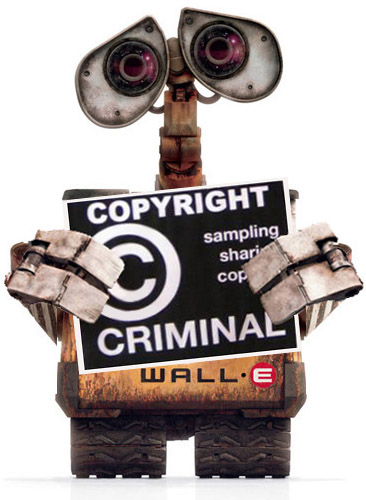
The problem today is that no one wants to have to pay for music.  There are so many illegal websites and services in which you can download music fro free.  Artists say that they are basically getting ripped off for their music because of these sites.  They put a copyright on their songs and therefore people should pay for them.  Vuze and Limewire make it easy for people to obtain the songs they want.  While some people use it for their own personal use, others use it to sell CDs or video, which creates copyright infringement. 

The problem today is how to filter out the bad users from the good ones.  Firstly, they would have to be able to catch them.  With all the sites available, it is very hard to keep track of all the corruption going on with copyright issues.  Another problem is to make sure that artists get reimbursed for radio and Internet play.  They need to try to forestall piracy of digital recordings over the Internet.  I do not believe they will ever completely get rid of this problem, especially with the new ways to download songs for free that keep becoming available.

What has led the segmentation of rock into sub-genres since the 1960s?

The invention of the magnetic tape is the reason that various types of sub-genres were created.  This new development improved sound fidelity, made editing easier, and reduced costs.  This resulted in the producing of more artists since it was much cheaper to record and had better quality.  Longer playing records and faster playing records were also invented.  This gave artists a variety.  They could either just make singles on the fast records, or they could make long albums with a bunch of songs. 

Artists, such as the Beatles, decided to generate longer songs that allowed more complex ideas and arrangements.  Many new FM radios moved toward the format of “album oriented rock”.  This genre stressed longer songs which, in turn, made their listeners towards albums.  Many other bands began to experiment.  Bob Dylan scandalized folk purists by using an electric guitar and doing rock albums. 
FM radio stations and recording companies began to diversify into distinct rock formats after 1970.  Different formats include: punk, glam rock, ska, reggae, rap, hip hop, grunge rock, R&B, and techno.  1960s rock is responsible for the dozens of sub-genres that have emerged since that year.  Musical sub-genres, and the subcultures that enjoy them, got their expression from the continuing formation of smaller recording labels. 

The introduction of the recording format wars began when the compact disc recording came out.  CDs took over records, which were in turn taken over by the Internet.  Rock has been the root cause to all of these amazing inventions, which give us what we have today; a fast and convenient way of getting our music of numerous genres.

Friday, September 17, 2010

Do you think new regulation would be justified to break up large radio groups and make radio a more local medium again?

I believe that new regulation would not be justified to break up large radio groups and make radio a more local medium again.  If we have more local radio stations, there is a chance that people will not find out about important news bulletins of the world.  Local stations will only care about what is happening in the community and the rest will be forgotten.  It is not right to take down big companies.  These companies worked hard to get the audience that receive now.  They should not have to be regulated and be punished. 

Local radio stations could prove hazardous.  If the workers do not feel like going in one day, the people in that community could be severely affected.  For example, there was a train accident in Minot, North Dakota.  Local residents tried to call the radio station to warn residents to evacuate, only to discover that there was no one there at the remotely controlled local station.  People could miss important information about their community, such as an accident, with local stations.  With large radio stations, you are certain that someone will always be there.  You may not get the information about your specific town right away, but news will come, if it is noteworthy enough. 

Even with large radio groups, local mediums still exist.  Some even prove to be an asset to the community.  Large groups provide significant news coverage.  I do not think that we should prevent large groups from doing what they do best.  Local stations should up their game if they want to compete with the giants of the radio industry.

How does the history of radio help us understand how Internet radio, podcasting, and other audio media are going to develop?

History: In the 1970s and 1980s, the radio was characterized by local operations.  After the 1990s, stations began to buy into centrally produced program formats distributed via satellite.  Internet forms of radio are going to start off small, as they had, and then one day just explode with interest from listeners.  The Internet already has XM and Sirius available, which brings people away from conventional broadcasts.  I believe that radio is soon going to disappear.  It will be dominated by the Internet radio, podcasting, and other audio media.  Four leading online networks include: Pandora, AOL Radio Networks, Yahoo’s Launchcast, and Microsoft’s MSN Radio.  Some of these networks erase the need for people to announce the songs or even speak at all.  Everything is becoming dependent on technology.  Podcasts make it easier to get exactly what you want, when you want it.  People are no longer satisfied with letting radios choose their songs, but desire to choose the songs and genres for themselves, at their own convenient time and place.

Commercial forms: As the radio became more and more popular, companies began to realize the opportunities of commercials in between songs.  Everyone wanted to advertise to this new vast audience.  Some stations became crowded by advertisements.  While this is good for the companies to get their product out there, it is also a bad thing.  People listen to the radio to hear music.  When commercials come on, most people just change to a new station with music.  I feel that the internet is becoming the same way.  If you go on a website, there is a high chance that you will hear someone random speaking about a product you do not care about.  Then you are forced to scroll down to mute it, or just move on.  Pop-ups are also becoming a major annoyance.  It is like they attack out of nowhere, demanding your attention.  Soon, the Internet radio, podcasts, and other audio media are going to become littered with commercial advertising.

Political forms: Internet audio media can be used to change the way the military functions.  In the past, radio frequencies were used for communication between army units.  All enemies would have to do is find the frequency being used and listen to the secret plans.  Now, with Internet, maybe there is a way we can make these calls more private, faster, and more convenient for our armies.

Artistic forms:  Like the radio, the Internet is always changing artistically.  New types of audio media are being creating and replacing old ones.  Music genres evolve with their audiences, and many radio formats have changed quite a bit in the last decade.  There is always something new on the internet.  Podcasts became a huge success, which has a invented a new way for people to get their ideas and opinions out to the public.  New genres and new communication techniques will replace old ones; an endless cycle of change.

Wednesday, September 8, 2010

The Web is Dead Long Live the Internet

Anderson and Wolff disagree on who is to blame for the death of the Internet. Anderson blames our own predilections and the inevitable course of capitalism for narrowing our internet use to things we can get easily through the use of apps. People who are searching for products want them delivered quickly and easily; what we want, when we want it.


Wolff, on the other hand, blames dead pocketed businessmen seeking to control the web. He states that the website is more a thing of the past. Culture of the web has had low barriers to entry. Anyone can do it and anybody can be somebody on the web. Forces, or new big businesses, have moved into this space. For example, Facebook has kept people from going to the web. People are satisfied with just going on Facebook that they never venture out to other websites.


The Web is like a city. People mingle in this public universe. Apps are the suburbs. Whoever can afford it is segregating themselves, which replaces major pieces of functionality. The web does stuff for us. It is pure functionality. Apps are much better technology that represents a better business model. The web never truly goes away. Google controls the web. No one else can get into it. The only way to penetrate it is to build an alternative, which Facebook and Apple have both done.


Local blogs have begun to address community issues, which has in turn gotten rid of the need for the local press. The local press has abandoned communities that are using blogs. This ongoing trend of new media has destroyed many businesses while creating new ones. Netflix is a vibrate, viable movie service which has taken over and almost completely erased the need for HBO. HBO is in peril due to this new and more efficient ways to watch the movies you want. Media, according to Wolff, is a structure that gives us information, entertains us, does the things that we want it to do, and organizes the information of our everyday lives. He believes media that does not support itself is a futile gesture and is not good for democracy. Media that does support itself, either by people paying for it or by advertisements paying enough, is good for democracy.

In what ways are new media affecting careers?

With the new invention and popularity of social networks, companies have a much easier time tracking and finding out information about the kind of person their potential employee is. Nothing is private anymore. If you have any pictures of you with a keg, your boss can find them and will most likely fire you. Companies do not want unprofessional people working at their facilities. This includes how the employee acts both in the workplace and in public, whether it is on Facebook or blogs. There is no hiding suggestive information once it gets onto the internet. New media has made the companies’ lives better, but the employees’ lives more difficult.

Another way careers are affected by new media is the loss and creation of various jobs. The paper industry, even though it is still around and productive, took a hard hit when the internet came out. They lost a good amount of their business due to technology. As most know, technology has its downsides; such as power outages and crashes. Technology has replaced and enhanced many jobs. Businesses, such as banks, have gone from only using paper, to using both paper and automotive technology. This helps tellers keep track of what they have by using computers. It gives customers the option to speak to a person for their money or to quickly, and just as easily, get it from a machine. The machines have replaced the need for so many employees in certain companies, creating a loss of numerous jobs. In turn, machines have created the necessity for maintenance workers and other types of jobs.

What are some of the ways in which new media are changing society?

New media has changed society greatly and drastically. In the past, people would communicate to each other by speaking face to face, writing letters, or sending messengers. Nowadays, there are way more options than that. These new options have made it easier and faster for people to relay messages to each other, but have also taken away a lot of the personal experiences. We now have post offices to quickly organize a person’s mail and distribute it with ease. Not even really bad weather can stop some of the businesses from getting their mail delivered in a timely basis. There is also the option of the Internet. People do not even have to take the time to write a letter, seal it, put a stamp on it, and put it into a mailbox to wait for it to be delivered. All they have to do now is type up an e-mail and hit the send button; instant satisfaction. No more waiting a few days for information to be picked up and then sent. Society has basically become lazy and impatient. Even with this new technology and speed, people are still complaining about how slow information travels. People rely too much upon technology. When the technology randomly shuts down or there is a power outage, everyone freaks out. They can not handle being without their electronics; the fast way to spread information. Another invention, the telephone, has turned into the more convenient cell phone. Most people can not leave their house without a cell phone nearby. In the past, people would just wait to find messages when they got home. Nowadays, no matter where you are, you can get a phone call to receive urgent, or not so urgent, information. It is like people today never get a moment to themselves.